SMS as the entry point to your funnel
Published
In this article: ► Attracting users through gamification and gifts ► Using SMS to simplify the redemption process ► Bringing prospects into the store and converting them into customers
Have you considered SMS as the entrance to your sales funnel? You read that correctly — SMS remains a highly effective communication channel today. See Why still use SMS? Here is what they say.
Here we want to look at the relationship between SMS and the funnel. In short, the funnel’s main job is to nurture prospects and convert them into customers. You may have heard that only 3% of prospects have an immediate need — so what about the other 97%? Merchants typically need to guide consumers through awareness, interest, desire and action (AIDA) so they first come to know the product or brand and eventually pay for it.
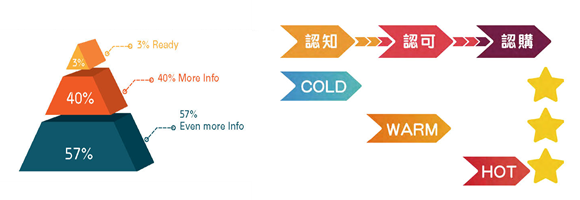
The key to converting visitors into customers
Even if you have brought a lot of traffic to your site, can you convert those visitors into customers? You have spent heavily on advertising, but that does not mean prospects will shop with you. In most cases this is neither a traffic problem nor a conversion-ability problem — it is a funnel problem. For funnel practice across channels, see EDM + SMS + WhatsApp on One Platform — Suppression Lists, Reporting, and Funnel Practice.
You and your team may propose all sorts of marketing strategies, and building a funnel that is both simple and cost-effective is one very effective way to attract customers. What is more…
building a funnel takes nothing more than one simple landing page.
In our experience, of the various funnel types, the redemption funnel is the most effective, because it lets retailers capture prospects and start nurturing them.
Why? Because redemption satisfies customers on two fronts:
- gamification adds enjoyment
- it offers a free gift, which every customer likes
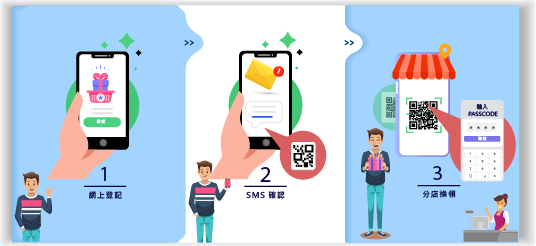
All you need is a landing page where customers register and consent to receive SMS in order to get the redemption details. That is genuinely the whole process. On the compliance side of collecting consent, see Hong Kong promotional messaging compliance checklist — what the UEMO requires of senders.
Redemption can work as an O2O mechanism: you can guide customers into the store and give them a gift, or offer them a substantial discount when they shop in person. For messages targeted by location, see What Is LBS? Location-Based SMS — How It Works, Use Cases, and Hong Kong Compliance.
There are several ways merchants can operate redemption codes:
- Show and redeem When the SMS contains a redemption code, it becomes a valid voucher. Redemption is very simple: the customer shows the SMS to a staff member and gets the specified gift or discount at checkout. Because this method makes it hard to track whether an SMS has been reused, it suits shops that welcome — or do not mind — codes being reused to raise exposure and sales.
- Digital tracking If your brand has several branches, things get more complicated. You want to use gifts to draw customers into your stores, but you also need to control gift stock and track each prospect for remarketing, so you need a systematic way to record who has redeemed. You can hardly imagine using a paper record sheet for live verification in the twenty-first century. So normally you should make good use of digital platforms and resources so the whole redemption flow can be settled in-store and the redemption report updates in real time.
There are three ways to track redemption code usage digitally:
- Zero-cost manual recording You could use a shared Google Sheet: whenever a customer shows a redemption code, staff look it up in the sheet, verify it, and record the customer’s mobile number, branch, redemption date and time. The major drawback is that you can never eliminate human error, and different staff all need to know how to work with a shared document. We do not recommend this approach.
- A cost-effective semi-automated hybrid You may already have a back-office system that lets staff log in and record redemptions. When a customer shows a code, staff enter the mobile number or the one-time redemption code into the system, and if that number or code has already been redeemed the system displays a “reused” message. This avoids any loss at your branches caused by human error.
- A fully automated system worth the money Today’s technology can of course add more design to simplify redemption further. For example, the merchant includes a unique short link in every SMS; the customer visits the store and taps the link, a staff member enters a password, and the system automatically marks the SMS short link as successfully redeemed. From then on, even if the customer taps the link again it is automatically invalid. This automated approach is now the redemption method most favoured by retailers and most commonly used in O2O business. On tracking clicks on those short links, see Open and click tracking.