The channel you thought was obsolete is the one that works
Published
In this article: ► Very high ROI at very low cost ► Building both one-off and durable marketing ► An acquisition tool and an immediate sales catalyst ► The long tail — nurturing toward conversion ► Building a first-party digital asset
Clients keep asking whether email still works. When they ask, they are usually going on their own reading habits rather than genuinely dismissing what email does. So — for marketing purposes, does email actually deliver?
Is email dead?
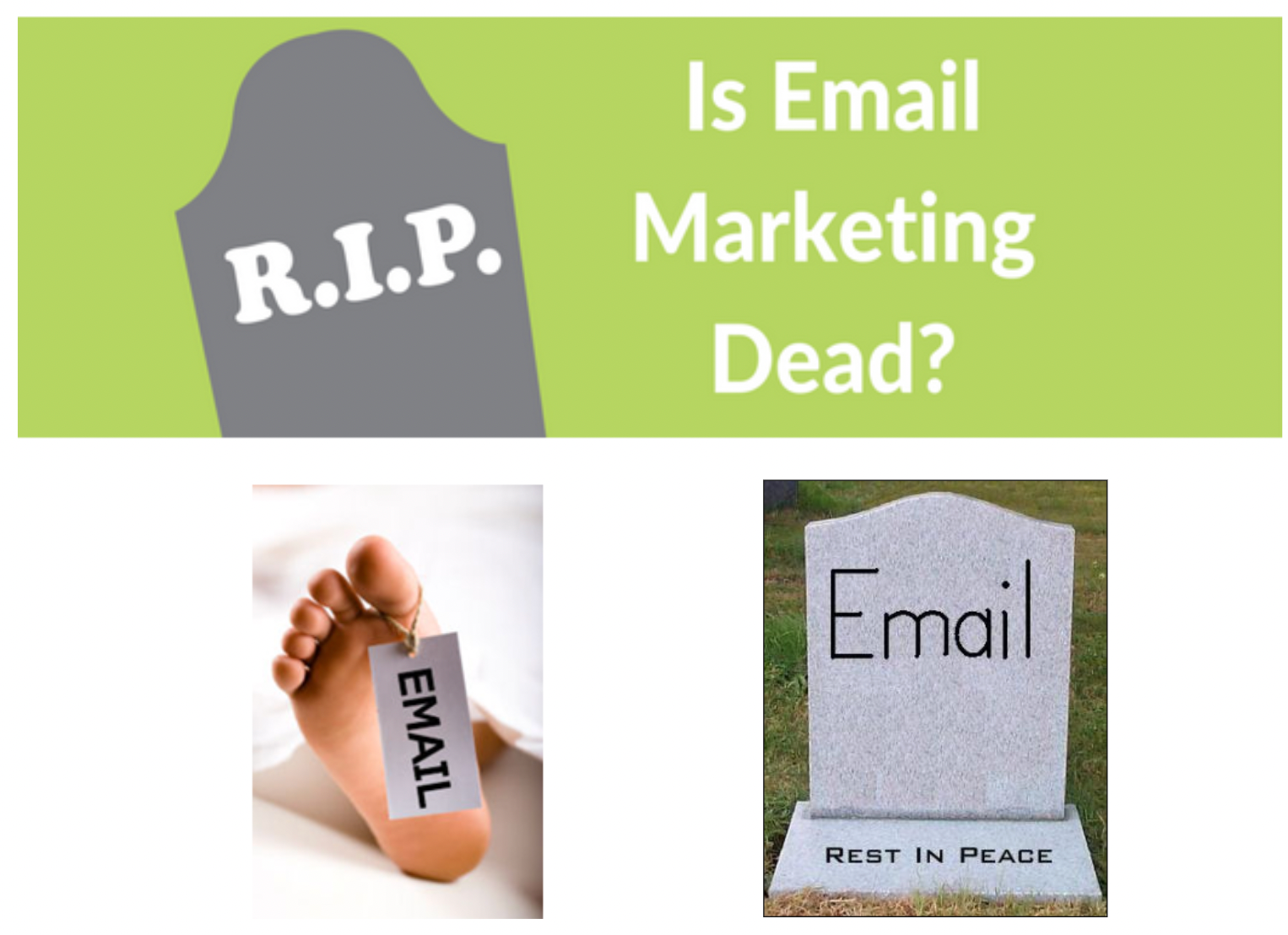
We all say there is far too much junk email and it is thoroughly annoying, so email carries a negative image and is widely assumed to have no influence. It is true that one in every six emails is spam. Is it still worth recommending? See The power of email, and why it surprises people.
In this article we look from several angles at what this old-fashioned tool actually does for the connection between brand and customer. We understand that using email as a promotional channel strikes people as surprising, so let us look at some numbers before drawing conclusions.
Low cost, high return
Reaching your target audience by email is a critically important part of nurturing customers, and one that gets consistently overlooked.
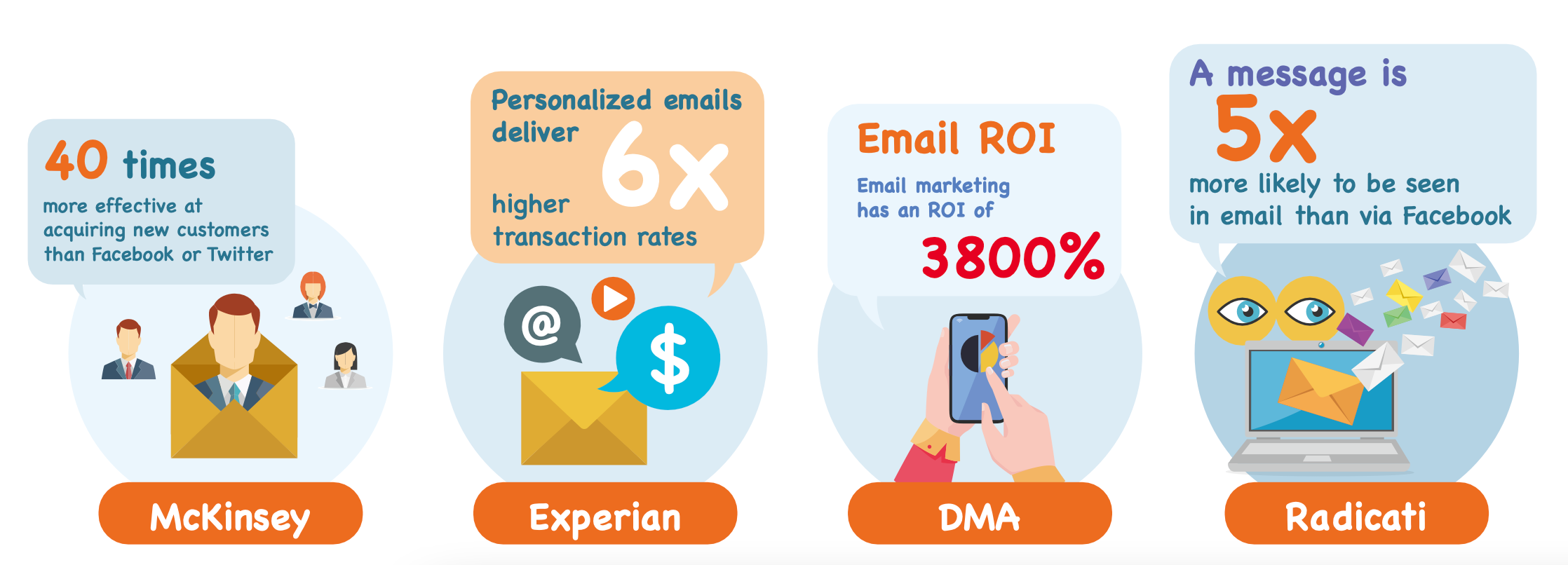
Add personalisation and sales can rise as much as sixfold. A McKinsey study found email to be up to 40 times more effective than social media for acquiring new customers.
On cost, email’s ROI runs as high as 3,800% to 4,400% — meaning $38 to $44 back on every $1 invested. Why? Because the base cost of a single email can be under HK$0.02, while the click-throughs and purchases that valuable content produces exceed what most businesses expect. On conversion rate, email also outperforms other media sixfold. So this is a game rewarding diligence. Content is king: the content has to give the customer value. Email is the soft, automatable medium, and if they are interested in your content it is not junk mail — it becomes the most important medium for moving them up the value ladder, and eventually they buy the higher-value products.
The long tail
Sales-side bosses always want to know whether the $1 they put in today really brings back $10. The arithmetic is not wrong; it just needs the time factor adjusted per channel. Marketing colleagues understand that the benefit of sharing information is not expected to produce orders within a few days.
Promotion and selling are two different concepts. Promotion spends money to build the brand and the customer relationship — a long-term arrangement. Selling is a transaction judged on the margin it produces. This article is about promotion. Do not expect to fling one email out and get a flood of orders back. Promotion is about letting customers understand you better. One day, when they trust you enough, and you can analyse them well enough to know what they want and put an irresistible offer in front of them, conversion follows.
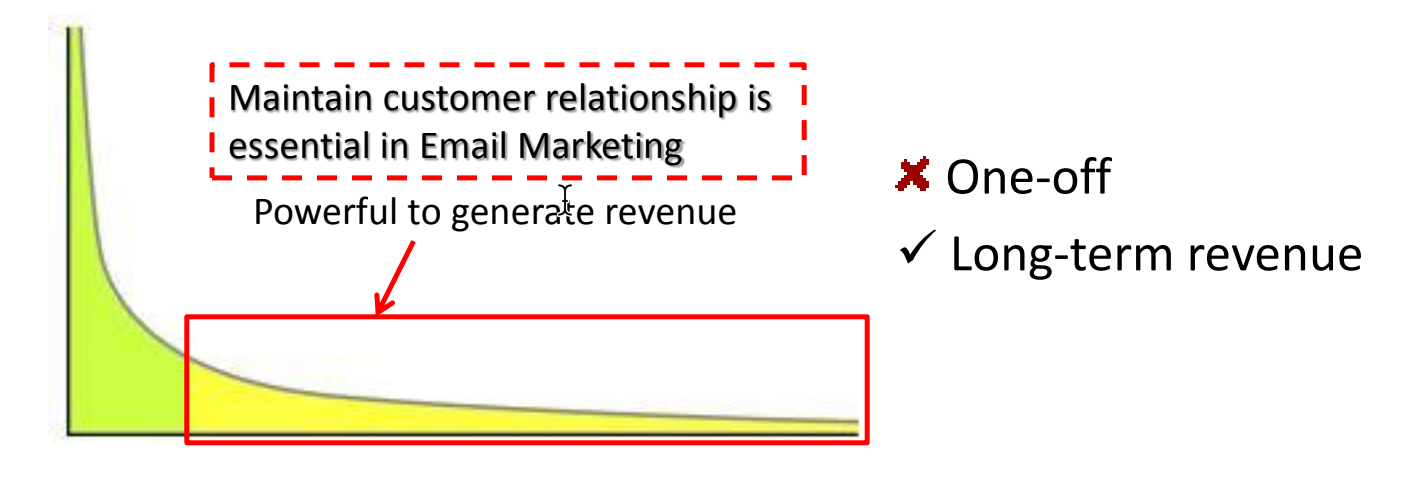
- After a promotional email goes out, 25% of the sales happen three weeks later. Recipients do not necessarily buy on receipt — they file it mentally, and when they decide to buy they go back to the inbox to find it and click through
- An old click is worth more than a new one
- The later the click happens, the more it is worth
Different channels have different natures
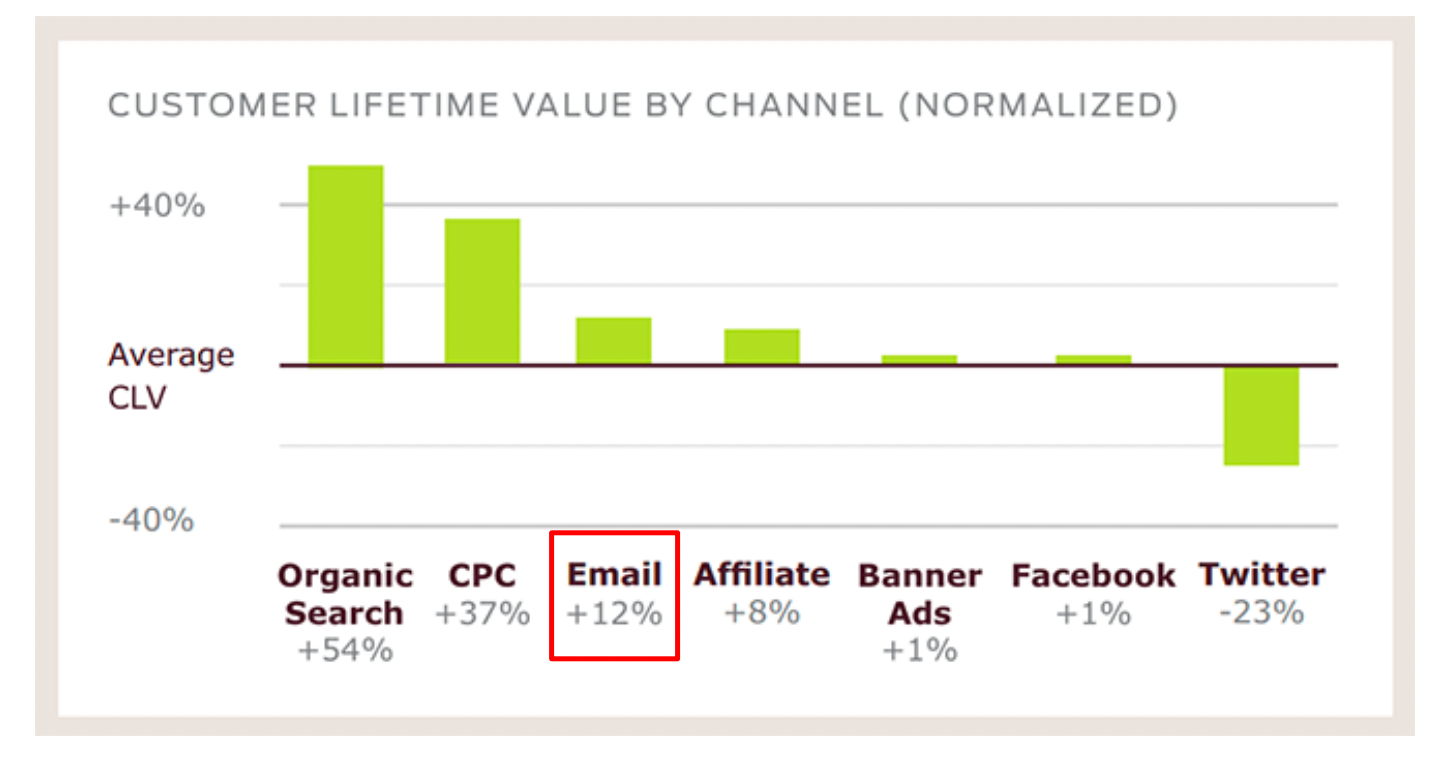
Compared with other channels, customers would rather receive promotional information by email, and customer lifetime value tends to correlate with how actively they sought the brand out. As the data shows, aside from active search, email remains a very important retention tool — largely because customers signed up for the useful information themselves. This is why we do not advocate harvesting email addresses online and blasting them at random. Those people never expressed any wish for a relationship with you, the effectiveness is close to 0%, and you take on the risk of your sending domain being classified as a spammer, which disrupts your day-to-day operations.
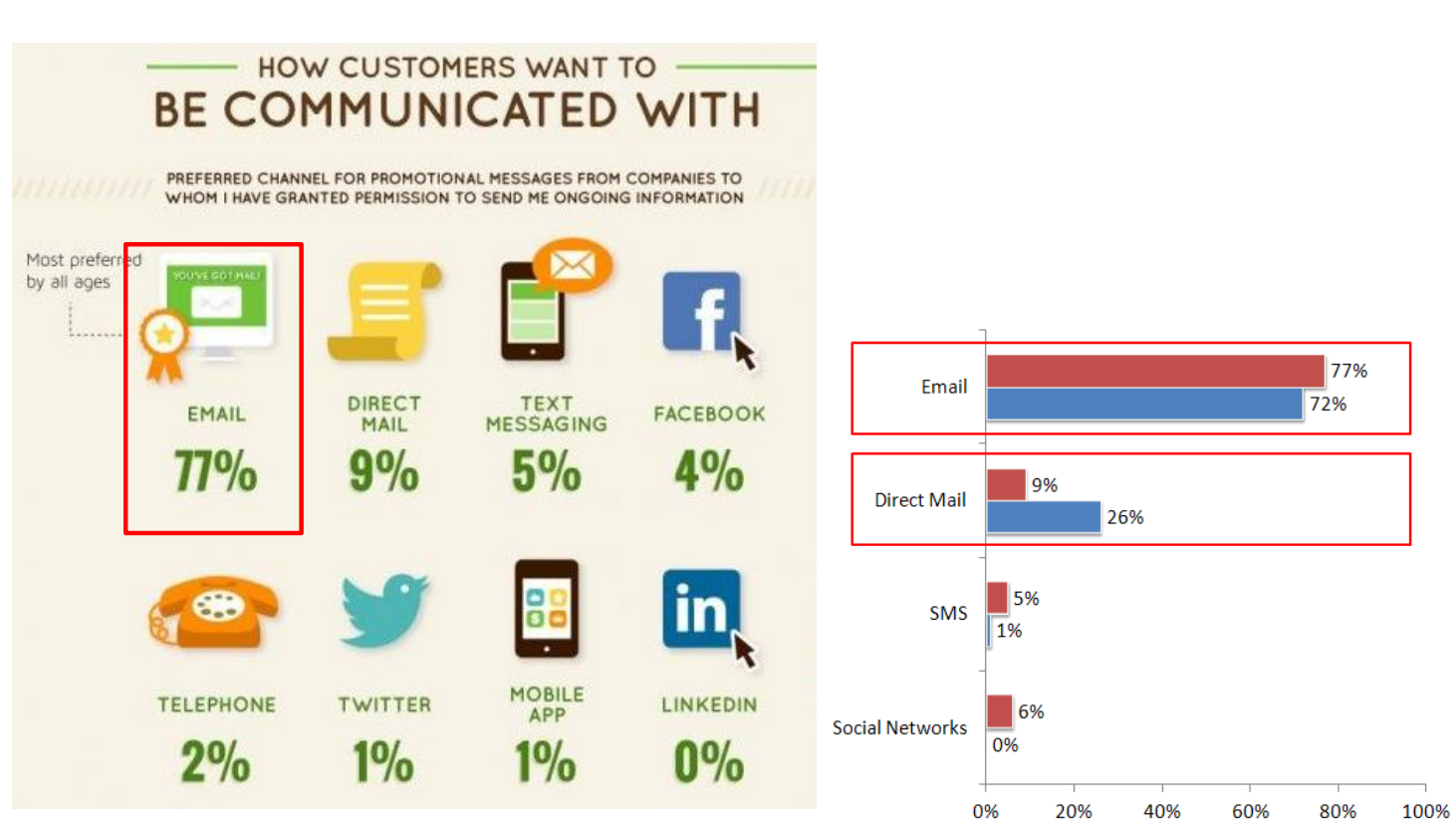
The best email strategy is to build a complete value-delivery programme first, then let customers subscribe of their own accord and trigger the automation. Users do not resist that — this is list hygiene. Many of our clients achieve a 96%+ success rate, precisely because they did the right thing: attract customers to opt in by delivering value through content.
For example, say I bought a Canon EOS R7 and you keep sending me information about Canon printers. That may not be what I want, so I read it as junk. But if you send me how to take beautiful photographs with the EOS R7, or which lenses and accessories to pair with it, I will happily accept it and even look forward to your expertise. So manage customer expectations: before they sign up, tell them what value they are getting, rather than whatever product the brand wants to push.
The strongest nurturing weapon there is
As noted above, different channels do different jobs. Email is a slow-permeating engagement tool. Unlike a cold call, it does not irritate the customer, and its length allows for a richer conversation — which makes email a good medium for telling a brand story.
Plenty of businesses spend time on the product and very little on constructing an email series. I once registered on a landing page to download an ebook about a brand’s cloud service. The project was not ready at the time so I did not buy. That brand followed me by email for two full years, which is to say it kept reminding me not to forget them — and most powerfully, it shared a great deal of useful eTips content. When our project eventually matured, I had built a deep familiarity with the brand and read countless case studies, and had real confidence in them. I bought their service, and it was not cheap.
That is nurturing. It cannot be judged over a short period, and the data does confirm that email creates future customer spend at extremely low cost. At minimum, while they are weighing up whether to buy, the conversation you maintain stops them forgetting you and wandering off to a competitor.
Promotion is:
Stay front of mind until the time is right
A first-party digital asset
Have you noticed that most brands’ member login systems use email as the username, and that registration usually requires verification? The purpose is to hold the most accurate contact details possible. Storing customer contact information is the most basic move in selling. Without it you cannot reach repeat customers; without prospect records you cannot give people more information to help them decide well, or run remarketing to win back customers who are drifting away.
Facebook, Google and Instagram are third-party platforms. A brand can gain exposure in those traffic pools, but it also has to find a way to capture customer data and build a first-party asset of its own. You cannot rely solely on advertising on those platforms to find customers. Even where they offer remarketing, you have to pay for it — and third-party platforms change their algorithms whenever they like. Many clients have lived through this: posting on Facebook used to be highly effective, and now reach is under 5%; on Google, the cost of the same keyword set keeps climbing.
Once you own the strongest digital asset, your conversion cost falls. Remember, acquiring a new customer costs five times as much as retaining an existing one. And if you treat your existing customers well, they gradually become loyal supporters who go on to promote your brand for you.
A simple approach: use a funnel as the entry point for capturing an email, then use email to offer further incentives that draw people into registering for other offers, gradually gathering preference data along the way.
With a CRM or an advanced funnel behind it, customer interactions get recorded through preference tagging. Want customers to become loyal advocates? Then you need to deliver the right message to the right person at the right time, precisely and specifically. You can also prompt customers to share information with the friends around them, which produces referral marketing. On CRM and keeping customers, see Starting a business is hard; keeping it going is harder.
Conclusion
Email is a soft but powerful marketing medium, and a tool that can engage customers at any stage of the funnel.
Our suggestion is that owners spend a few hours writing 5–8 emails. Start with a greeting email, then write about solving pain points or something genuinely interesting. Remember, never hard-sell the product by listing its features. Before the relationship exists, what a customer wants to know is a solution for their life, not an introduction to a product. So deliver value, not price — and only at the end attach an irresistible offer as a strong CTA to drive conversion.
One of the goals of marketing is telling your audience a story, and promotion is a game won by diligence in producing content. Not doing it costs you. Spending the time to write and send email keeps customers remembering you, and posting the same pieces on a blog helps SEO while showing customers how professional you are — that you are the expert in this field.
Further reading: How do you keep your email out of the spam folder?