Want to be more competitive? Put a Sender ID on your business messages
Published
In this article: ► A simple way to leave a strong impression on the recipient ► Using a Sender ID also means a more reliable delivery method is in use
Sending SMS or MMS has become the most effective and direct way for major businesses and brands to communicate with customers.
We all receive messages from different companies every day, and opening the messaging app you always see two kinds of sender: a pile of unfamiliar phone numbers, and merchants with actual names. Honestly, even before opening and reading it, a message carrying a brand name is more reassuring. With so much fraud around, a message from an unknown number is more likely to be deleted straight away, to avoid leaking personal data and losing money.

Have you thought about how to stand out in your competitive environment, and leave a deeper impression on prospects before they have even opened the message?
The answer is very simple:
Use a Sender ID — a sender name — when you send.
You may find it hard to believe such a small move can make a business stand out. Put yourself in the recipient’s position: would you rather see a sender with an actual name, or just a string of digits that looks like a scammer?
Because a custom Sender ID can only contain 3 to 11 Latin letters or Arabic numerals, the overwhelming majority of businesses use their brand name. Using a Sender ID carrying the brand name helps build consumer awareness of the brand, raises loyalty and revenue, and strengthens the business’s development potential and profitability.
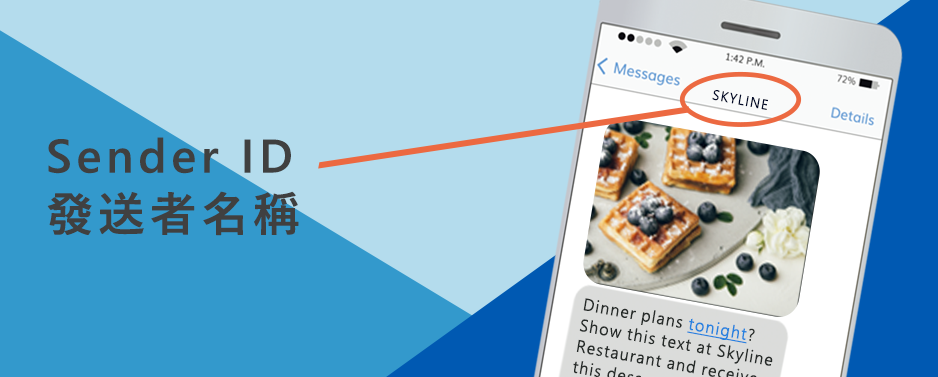
Conversely, if a business has not set up a Sender ID, that means the SMS provider can send using nothing more than an ordinary SIM card — so when consumers receive the message, all they see is that it came from an unknown phone number.

A sending model with a custom Sender ID is also more reliable, because the message goes out directly through the carrier and the delivery success rate is genuinely assured. Businesses can check send records, progress and status online in real time, and export those records and reports to Microsoft Excel so different departments can adjust marketing strategy in good time.
A custom Sender ID does cost slightly more than SMS without one, but it is this approach that genuinely captures consumer attention, raises brand competitiveness, and communicates more effectively between brand and customer.
MMS supports Sender ID as well as SMS. If your message is long, SMS may cost more, so consider MMS — see The difference between MMS and SMS, and what each is for to learn more.