They are waiting for a chance to respond
In an email marketing strategy, every email you send carries an intent: getting the recipient to buy a product, order a service, subscribe to your articles, or something as simple as visiting your website. We call all of these invitations a call to action (CTA).
Every email should contain one or more CTAs
In practice, when your recipient opens the email you sent, is moved by what you wrote, or agrees with your suggestion and accepts your invitation, they expect to respond with an action. So an email without a CTA does not just cost you the chance to take the relationship further — the reader feels a certain letdown too, and their sense of the relationship starts to feel less solid.
An email with a CTA gets opened again and gets revisited, and your impression deepens each time. An email without one does not stay long on the recipient’s server either. A CTA also helps you understand which way your recipients — your customers, really — lean. Choosing the CTA means taking action, and not taking it also expresses something. Set different CTAs across different kinds of email and, at minimum, the responses tell you whether they like that kind of activity. The information gathered across those different angles then helps you segment customers later.
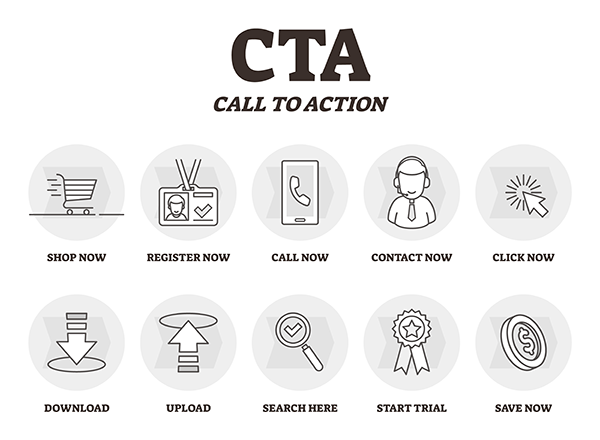
Every CTA is an opportunity to follow up
There is a further benefit: a CTA earns you the right to contact the recipient more directly. When a recipient does not take the CTA, you can call them to find out why. Was it a technical problem? A misunderstanding somewhere? Or simply not a convenient moment to say? Every CTA leaves an opening to follow up.
Although this started with the ultimate purpose of sending email, do not use the CTA purely to ask people to buy. The CTA most recipients are willing to take is sharing the valuable article you sent them, and inviting their friends to subscribe (much like forwarding an e-card after receiving one at a festival). Do that and your contact database keeps getting richer.